
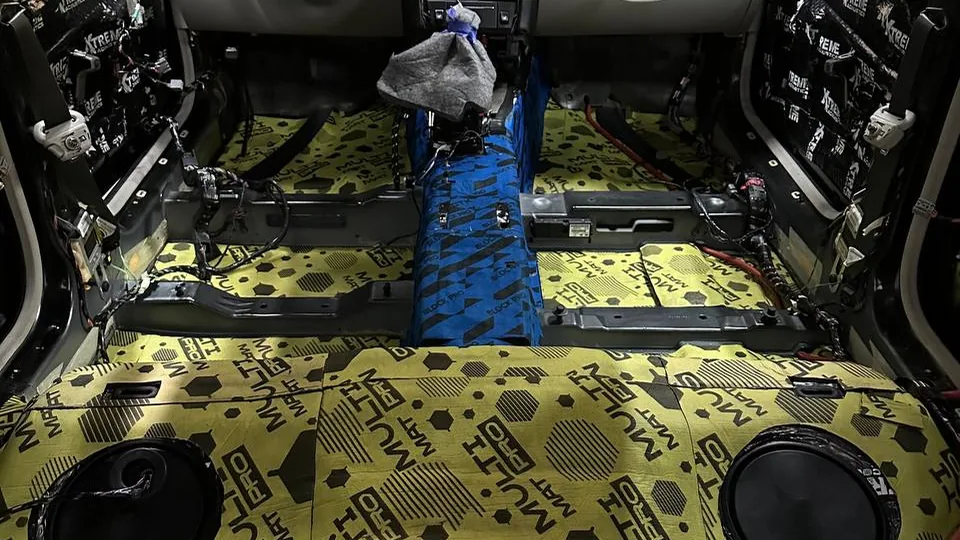
Choose soundproofing areas according to when and where noise occurs. For speaker-related rattles, assess the doors; for surface-dependent road noise, check tyres, wheel arches and floor; for rear booming, assess the boot. Whistling near a window or a sudden new noise needs diagnosis first. A complete package makes sense after identifying several noise paths.
How should you describe the noise first?
Note the speed, road surface, weather, seat position and whether the noise also happens while parked. A sound that follows engine speed offers a different clue from one that changes with the road. Where you hear a sound is not necessarily where it starts.
Rule out loose objects, damaged seals and mechanical faults first. Damping sheets cannot repair a bearing or adjust a door. A sudden new noise calls for a vehicle check before a larger soundproofing package.
What changes between doors, floor, wheel arches and boot?
This table identifies areas to assess. It does not predict a decibel reduction or diagnose a cause from a description.
| Symptom | Area to inspect | Possible treatment goal | Limit |
|---|---|---|---|
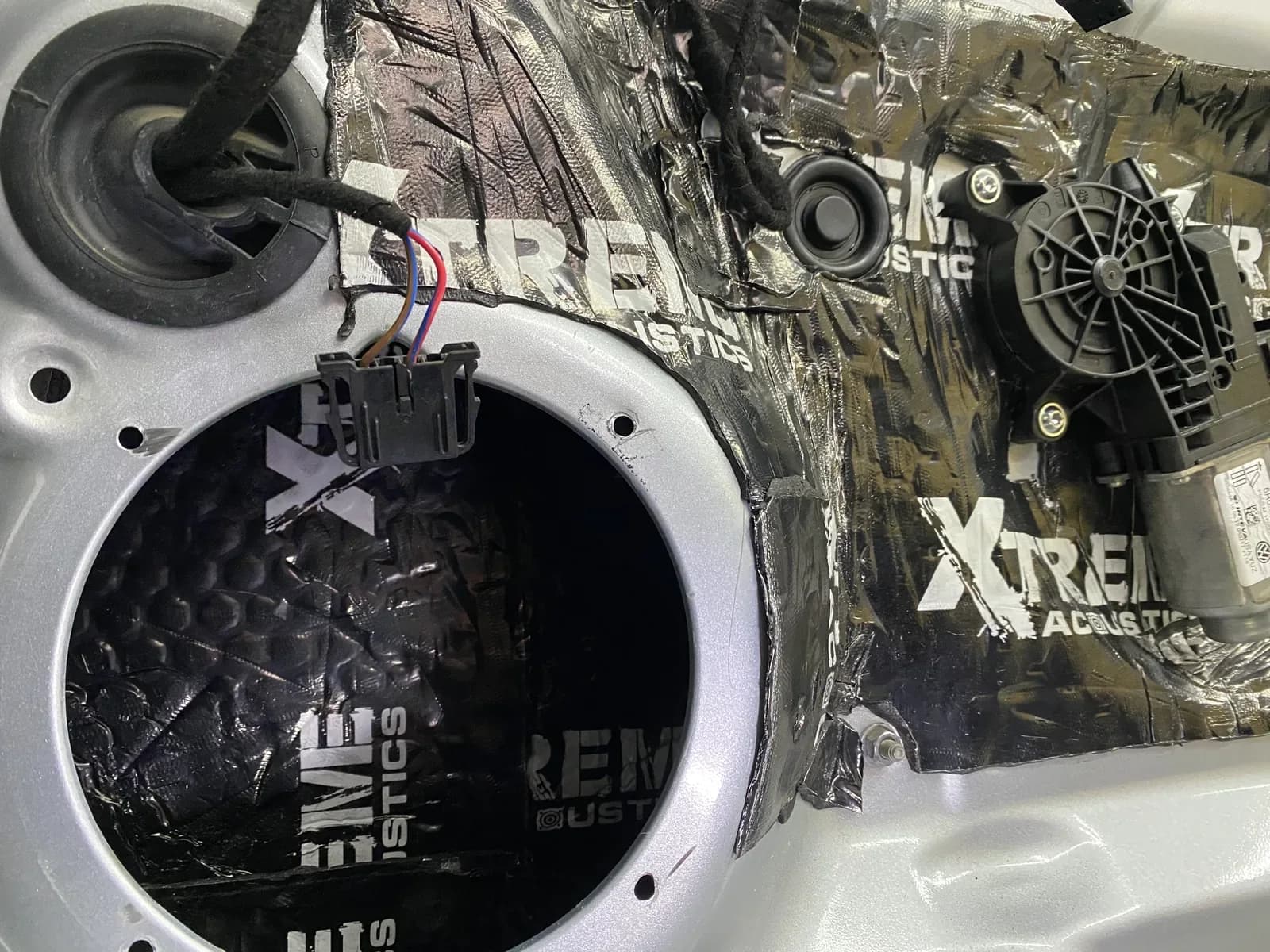
| Rattle during music | Speaker, adapter and door trim | Reduce panel and contact noises | Does not replace a healthy driver |
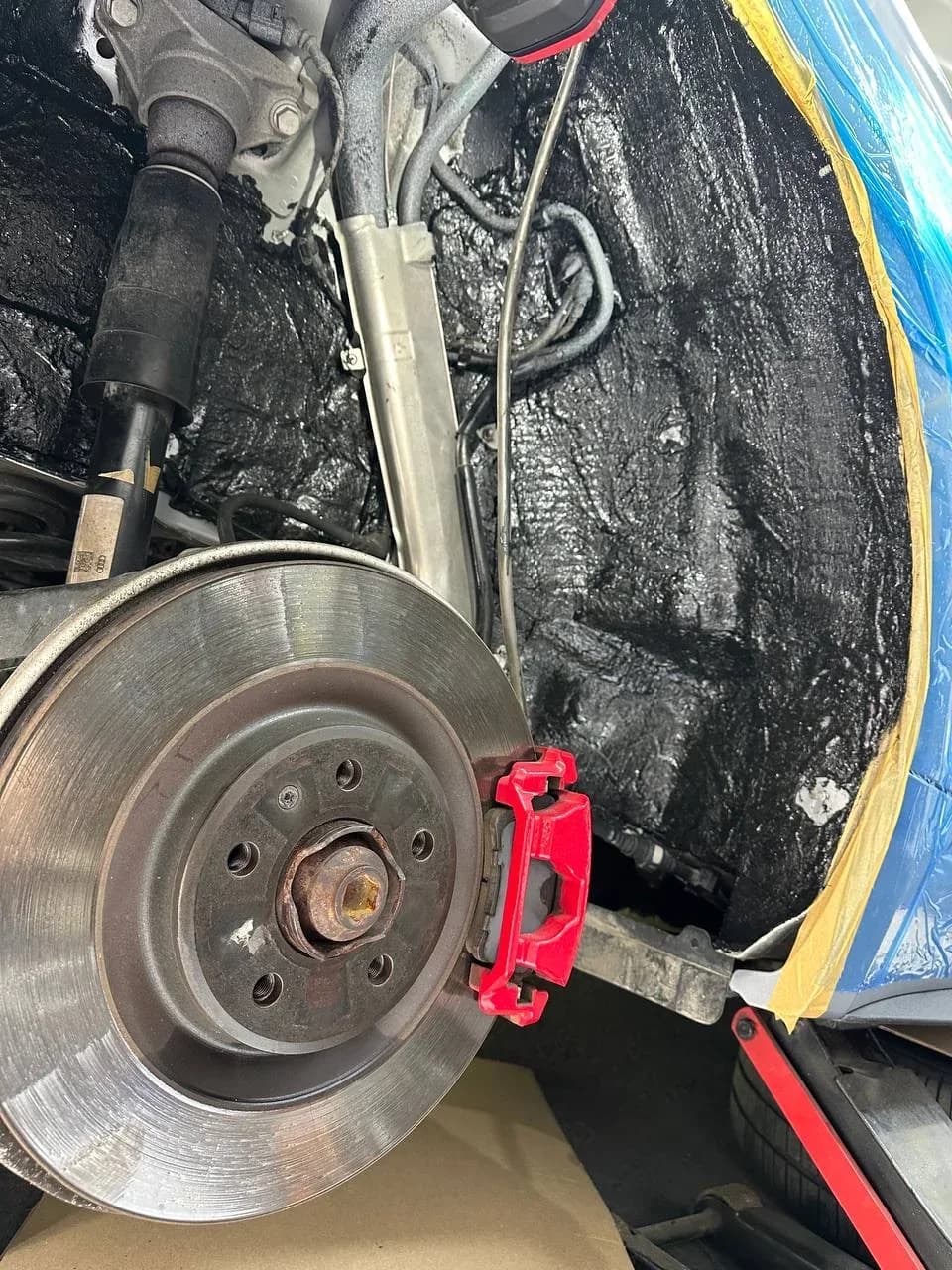
| Noise changes with road surface | Tyres, wheel arches and floor | Reduce selected transmission paths | Does not remove all tyre noise |
| Booming from the rear | Boot, cavities and rear arches | Reduce panel radiation and resonance | Depends on body construction |
| Loud rain overhead | Roof skin and headlining | Control panel vibration | Does not repair a leaking roof |
| Whistle near a window | Seals, door fit and accessories | Address the cause first | An extra sheet may not affect it |
Can the doors alone be enough?
They can be a useful stage for door-speaker performance or local rattles. Rigid mounting, correct sealing and vibration control do not automatically require stripping the whole cabin.
If wheel noise on longer journeys is the main issue, door treatment does not cover every transmission path. Stronger bass or a heavier door-closing sound alone does not establish a reduction in road noise.
What does “whole-car soundproofing” actually cover?
Ask for an explicit list: doors and trim, floor, boot, tailgate, roof, wheel arches treated inside or outside. The phrase “whole car” does not prove that all of these are included. Record excluded areas and the reason for each limit.
Damping panel vibration, absorbing sound and decoupling touching parts are different jobs. Material and thickness must suit moisture, temperature and available clearance. Drains, wiring, seat mountings and safety components must retain their function.
How should you assess a first stage?
Compare the same route, surface, speed and seat position in similar conditions. Keep tyres, pressures, windows and ventilation settings consistent. Record road hiss, booming and individual rattles separately.
A phone can help you remember a sound, but automatic recording gain does not provide a reliable before-and-after dB result. If measurement is agreed, specify equipment, microphone position and the procedure for both runs. This is a comparison method, not a studio result.
- Describe the most intrusive noise and when it occurs.
- Set the first goal and limits for cost and added weight.
- Coordinate trim removal with audio or ambient lighting if planned.
- Check windows, locks, controls and trim fit after reassembly.
Questions and answers
Can a specific dB reduction be guaranteed?
Not from the model name or package label alone. Results depend on noise sources, treatment and measurement conditions. A result from another vehicle is not a prediction for your car.
Is a thicker damping sheet always better?
No. Material function, properties, position and installation matter. Excessive thickness may prevent correct reassembly. A layer count without its purpose is not enough to compare offers.
Can soundproofing and an audio upgrade be combined?
Yes. Shared access to the doors can reduce repeated dismantling. Keep the goals distinct: speaker operating conditions and on-road acoustic comfort need different assessments. Agree both scopes before work starts.
Want a calmer cabin?
Tell us when and where the noise is most noticeable. We will match the zones to the problem instead of suggesting a generic package.