
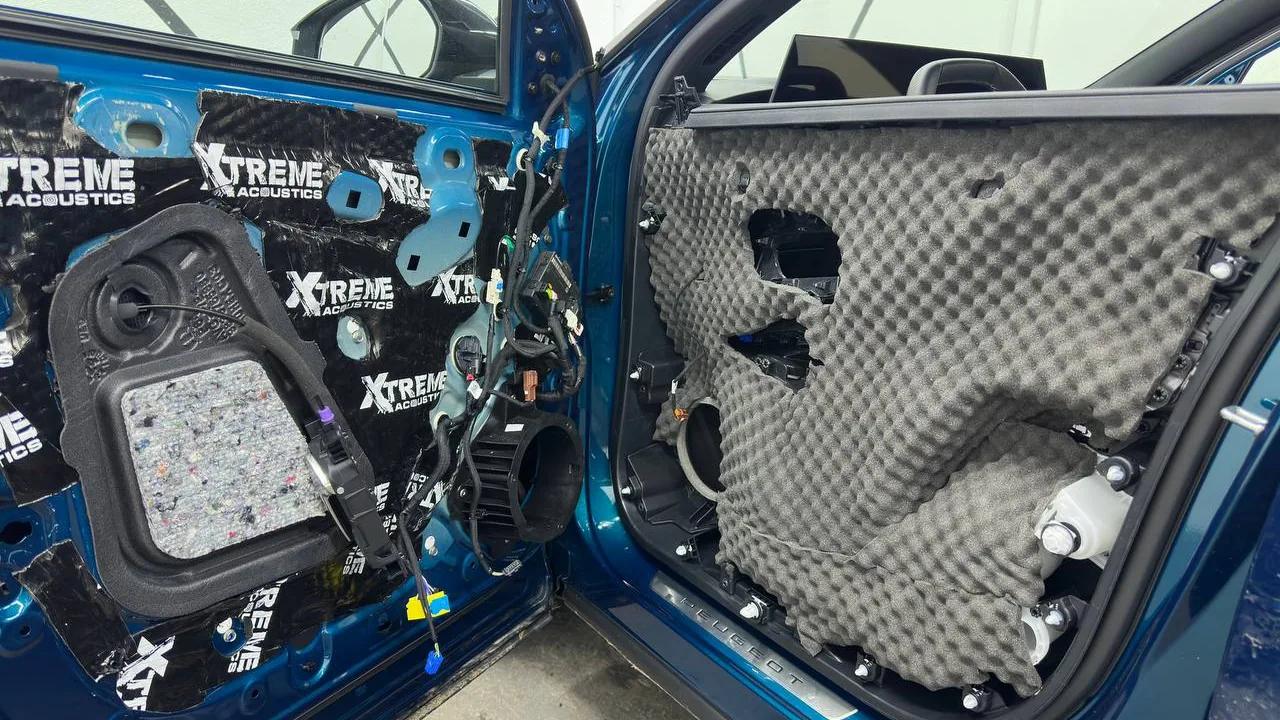
Door treatment can reduce metal panel vibration and trim rattles, while a rigid, sealed speaker mounting helps avoid losses at low frequencies. The result depends on the door construction and the cause of the problem. Damping material does not increase stereo power, replace a subwoofer or guarantee a particular reduction in cabin noise. Separate three tasks first: mounting the speaker, controlling vibration and managing sound behind the trim.
Why does the door affect bass?
A door speaker operates next to metal panels, access openings and plastic trim. These are different conditions from a purpose designed loudspeaker enclosure. Sound behind the cone can reflect off the outer skin, while loose parts can add unwanted noises. A complaint about weak bass therefore does not always point to a speaker that needs replacing.
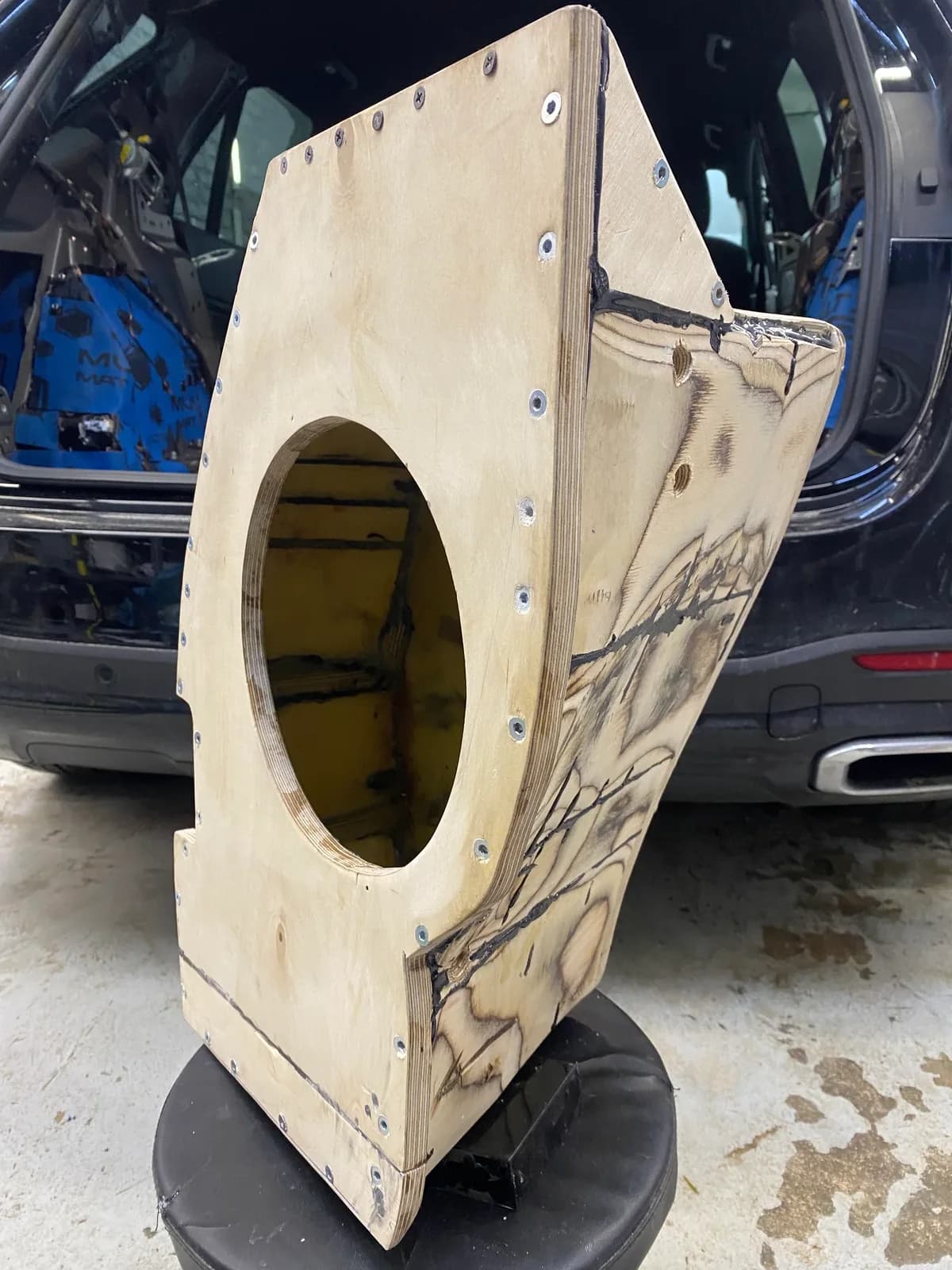
Leaks between the speaker basket and its mounting surface can cause low frequency cancellation. The rigidity of the adapter also needs checking. Adding material beside the speaker does not automatically correct its mounting. The door still needs drainage and window travel: it should not be treated as a box in which every opening must be sealed.
Three tasks, rather than one universal layer
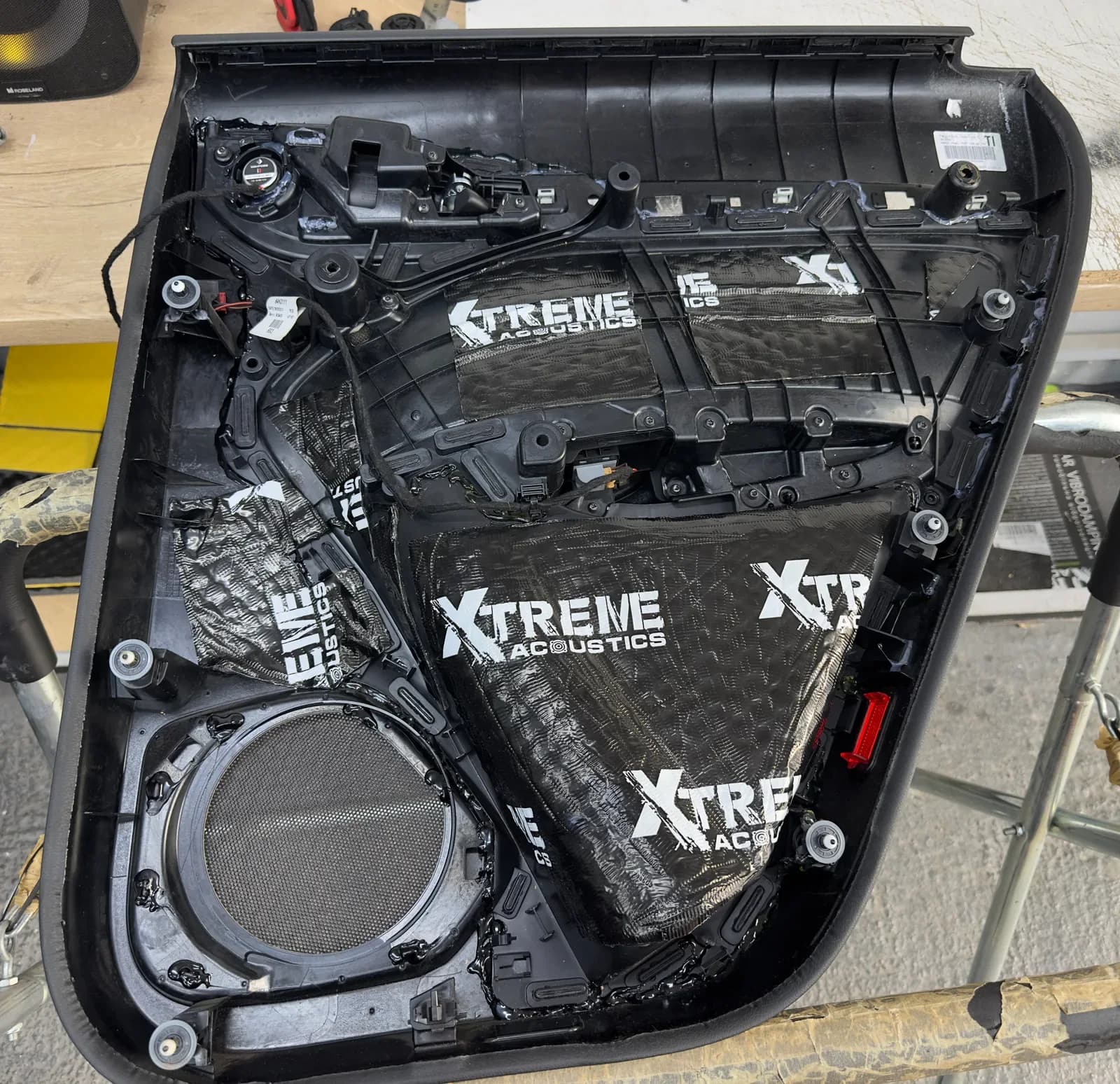
A vibration damping mat works with a panel to reduce its vibration. An absorber takes up sound energy in a suitable location. A soft separator between touching parts can reduce their rattling against each other. These functions are not interchangeable, and a layer count alone does not describe the scope of door preparation.
Choose materials for the location and moisture exposure. For example, CTK LineFix 7 belongs in a dry, protected area behind the trim, rather than the wet door cavity. This does not make one kit the recommendation for every car. Available space, the material requirements and the ability to refit the trim without forcing it all need checking.
Symptom → check → assessment
Use this table to discuss the work, rather than diagnose a car from one symptom. Several causes may be present together.
| Symptom | What to check | How to assess it |
|---|---|---|
| Trim rattles on particular bass notes | Clips, trim contact points and vibrating panels | Whether the same passage still triggers an extra noise |
| Bass became weaker after a speaker change | Polarity, mounting seals and factory filters | Whether one channel or both are affected |
| Distortion appears only at high volume | The speaker, signal and available power | Whether turning down removes it; damping cannot repair clipping |
| Tyre noise while driving is the main concern | Noise transmission paths and other body areas | Comfort on the same road surface, separately from parked music playback |
Is it worthwhile with factory speakers?
Yes, door preparation can be considered without replacing working factory speakers, especially when rattles or poor mounting are the concern. Do not expect an identical result from every factory system. A worn driver, a restricted signal bandwidth or stereo equalisation needs a separate assessment.
Set a priority before buying: remove a noise, make bass easier to follow at normal volume, or increase the output of the whole system. If a speaker upgrade is planned, coordinate the stages to avoid unnecessary trim removal. A vibrating door alone is not a reason to buy a speaker set with a higher power rating.
Does it replace a subwoofer or whole car soundproofing?
No. Preparing the door improves the working conditions of the existing driver; it does not give it unlimited bandwidth or cone excursion. Deep bass may call for a separate subwoofer and amplification plan. Likewise, material cannot restore frequencies missing from the factory audio output.
Better music while parked does not prove a particular reduction in road noise. Tyres, the road surface, seals, the floor and wheel arches create different transmission paths. Do not convert an impression of fuller bass into decibels of cabin quietness or a percentage improvement. Work intended to improve driving comfort should follow the noise source.
How can you compare the sound before and after?
Choose a short, familiar passage with clear bass and vocals. Park safely and keep the source, equaliser settings, listening position and window positions the same. Note rattles, vocal clarity and bass perception separately. A more solid sound when closing the door is not, by itself, a test of music reproduction.
Start at your normal listening volume without boosting bass for effect. When judging tonal balance, bring the before and after listening levels close to each other: the same volume control position does not always mean the same sound level. A phone recording may help you remember a rattle, but it does not demonstrate a gain in dB. This is a comparison method for the driver, not a measurement result.
What must still work after reassembly?
Drainage, window movement, locks, wiring and service access must remain functional. Factory barriers protecting the cabin from water need to be preserved or restored to suit the vehicle construction. Safety components must not be removed, nor unfamiliar openings sealed simply to achieve complete visual coverage.
After reassembly, check full window travel, handles, the lock, switches and both audio channels. Added material must not push the trim out of its fixings. A new crackle, moisture or restricted window movement calls for a mounting check, rather than another layer.
Checklist for discussing door treatment in Warsaw
Prepare a short description of the problem and agree on the first stage objective. You do not need to dismantle the door yourself.
- Car model, year, factory audio version, previous speaker changes and any door repairs.
- When it happens: music while parked, rough roads or a particular driving speed.
- Scope: which doors, speaker mounting and seals, treated panels, absorber and trim contact points.
- Materials suited to moisture and clearances; preserved drainage, factory functions and service access.
- Acceptance criteria: the same music passage, no identified rattle and working mechanisms; road noise assessed separately.
What should you request before the trim conceals the work?
Ask for documentation of the agreed surfaces, mounting and clear drains. A photo of finished trim does not show material inside; a pre-assembly photo does not prove window operation. Both kinds of checks are needed.
Documentation helps compare work with the scope, but photo count or sheet-metal coverage percentage alone does not measure acoustic improvement.
- Record materials and locations, distinguishing dry and wet areas.
- Show the adapter, sealing and cable routing.
- Retain service access and check the factory water barrier.
Questions and answers
Can an absorber be used in the wet area of a door?
Only if the manufacturer approves that material for the location. Foam intended behind dry trim does not become water-resistant when covered by damping sheet. Check the actual product application.
Should every opening be covered?
No. Drains and required functional openings must stay clear. Service openings and factory barriers need treatment appropriate to the door construction, with access retained.
What should you do about a new crackle after installation?
Note whether it happens with window movement, bumps or music. Fit, wiring and mounting need checking. Another material layer or stronger bass cannot replace identifying the cause.
Want better music, starting with the cause?
Describe the car, audio version and when bass or rattles become a concern. Check the service scope and prepare the details for a discussion about doors and speakers.