
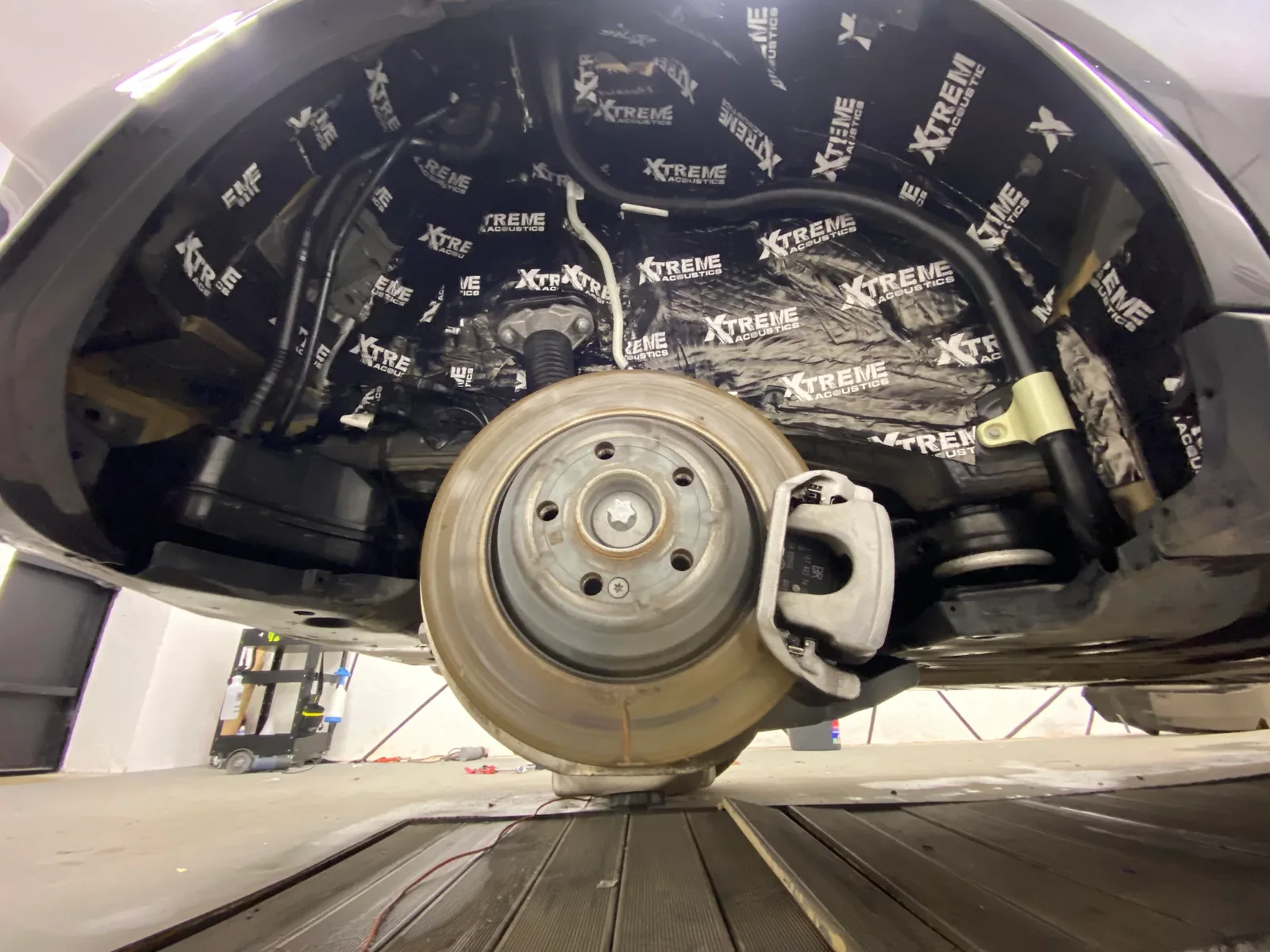
Wheel arch soundproofing can reduce the share of tyre noise that reaches the cabin through the areas around the wheels. If the sound changes noticeably on a different road surface, start by checking the tyres. A whistle near a window points towards seals and trim. Get a new hum, rubbing sound or vibration checked before booking soundproofing.
What should you check first when the car is noisy at speed?
Start with the first row that fits. Use it to explain the symptom to a technician. More than one source can be present, and a sound may be clearest some distance away from where it starts.
| What you notice on an ordinary drive | First check |
|---|---|
| A new hum, rubbing sound or vibration, especially after hitting a pothole | Have the tyre and wheel checked. With a speed-related hum, a technician may also inspect the wheel bearings. If you spot a tyre bulge or feel strong vibration, stop safely and contact roadside assistance. |
| A whistle near a window, mirror or roof | Check the fit of the glass, seals and trim. Tell the technician if the whistle started after you fitted roof bars. |
| A steady rush of noise changes abruptly where the road surface changes | Check cold tyre pressure against the vehicle manufacturer's recommendation and check the tread. Once faults have been ruled out, consider the wheel arches and floor. |
| The pitch follows engine speed at a similar road speed, or you hear it while parked | Share that observation with a mechanic. The engine and its accessories are possible starting points for inspection. |
How can you describe the noise without a special test drive?
Once parked, write down when you first noticed the sound and any recent changes to the car. Note the approximate speed, surface, weather and where you heard it most clearly. A passenger can make notes on the way. Observations from a normal trip are enough. Avoid manoeuvres or speeding up to provoke the sound.
Example. “There's a low rush from the back on coarse asphalt. It's quieter on smooth tarmac at a similar speed. I first noticed it after the seasonal wheel change.” Start with a wheel and tyre inspection. If both check out, ask whether treating the rear arches and boot floor would address the noise that remains.
Treating wheel arches from the wheel side or the cabin side
From the wheel side, work can cover the metal wheel housing, the arch liner or both. Ask which surface will be treated and whether the material is approved by its maker for that location. Water and road salt matter here. Drainage, liner fit and clearance around the tyre all need to be preserved.
Access from the cabin side may involve removing carpet or boot side trim, depending on the car. A damping layer reduces vibration in the metal. An insulating layer limits sound transmission. If noise from the wheels also reaches you through the floor, ask for that area to be assessed separately.
What should you agree before booking wheel arch treatment in Warsaw?
Share your notes and the outcome of any inspections. Ask which axle and side of the arches the quote covers, what will be removed and which sound the work aims to reduce. If your main concern is the rush on coarse asphalt, compare that sound on a similar stretch, at a similar speed, on the same tyres and from the same seat.
Questions and answers
Does the dB figure on the tyre label tell you how loud it will be inside?
The EU tyre label shows external rolling noise. It is useful when comparing tyres, while cabin noise also depends on the road surface and how sound travels through the body. The label figure cannot tell you how much difference treating the wheel arches will make.
Should you lower tyre pressure to make the car quieter?
Set the cold pressure to the value in the owner's manual or on the vehicle's tyre placard for your load. Underinflation changes how the tyre works and can lead to uneven wear. If a new noise is still present at the recommended pressure, have the tyres and wheels inspected.
What if you hear a new rattle at a wheel after soundproofing?
Tell the workshop when the rattle occurs and ask them to check the liner, its fasteners and tyre clearance. If you suspect contact with the tyre, stop safely and arrange an inspection. Compare the road noise once the new sound has been addressed.
Want to discuss car soundproofing in Warsaw?
Have the car model, a description of the noise and any inspection results to hand. The service page lists the work and the studio's contact details.