
To compare cabin noise before and after soundproofing, drive the same car along the same stretch of road, in the same direction and at the same speed. Use the same meter and microphone position, and record LAeq over an interval of the same duration. Make several runs before and after the work. Separately, note whether the particular sound you wanted to reduce has changed.
How to make the drives comparable
Choose a stretch where the noise usually occurs and you can safely hold a legal speed. Decide where the measurement starts and ends before the work. If you test two speeds or drive in both directions, keep a separate set of readings for each. Changing tyres and adding soundproofing at the same time means the reading includes both changes.
Mount the microphone securely, for example at ear height by the passenger seat and clear of the airbags. Keep its position and orientation the same. Avoid shielding it with your hand or placing it in the airflow from a vent. Let a passenger operate the equipment during the drive. If you are alone, set up the recording while parked and review it after stopping.
What to put in the measurement log
Copy the log and fill in one column for each set of runs. Keep every repeat reading. Decide in advance what warrants repeating a run. If you have to brake within the segment or a lorry passes close by, record the reason and repeat the run once the agreed conditions return.
| Record | Before soundproofing | After soundproofing |
|---|---|---|
| Date, areas treated, occupants and load | … | … |
| Road segment, direction, surface type and condition, wind | … | … |
| Speed, drive mode and gear or engine speed where relevant | … | … |
| Tyre model and pressure, vehicle warm-up | … | … |
| Windows, sunroof, fan setting, radio and conversation | … | … |
| Meter or phone and app, microphone, position and orientation, calibration check | … | … |
| Metric and interval, readings from all runs, disturbances | … | … |
| Which sound is audible and when does it bother you? | … | … |
What can a phone tell you about cabin noise?
An audio recording can help you recognise a rattle, whistle or rumble. A sound-level app can provide a rough comparison if you keep the phone, microphone, app and settings the same. Accuracy depends on the setup as a whole. Even for the NIOSH SLM app, the Class 2 test requirements apply to the configuration with a calibrated external microphone.
To document a small change, use a sound level meter that logs LAeq. Check its calibration before and after each set of runs, following the meter instructions. Report the meter model and microphone position alongside the readings.
How to read a change in decibels
LAeq is the equivalent sound level over a stated period, with A-weighting applied to the sound frequencies. Record the duration and compare the same metric. A maximum or a fleeting reading on the display cannot stand in for the level over the chosen interval.
Check the spread of the repeats within each set. If the before and after ranges are similar, these runs give you little basis to separate a treatment effect from normal variation. If the road was dry before the work and wet afterwards, wait until it is dry to repeat the after run.
Decibels are logarithmic. A fall of 3 dB in LAeq corresponds to roughly half the A-weighted mean-square sound pressure at the measurement point. It does not mean the cabin will sound half as loud. Make a separate listening note, for example whether a steady-speed rumble has gone or conversation feels easier.
What to agree before leaving the car at the workshop
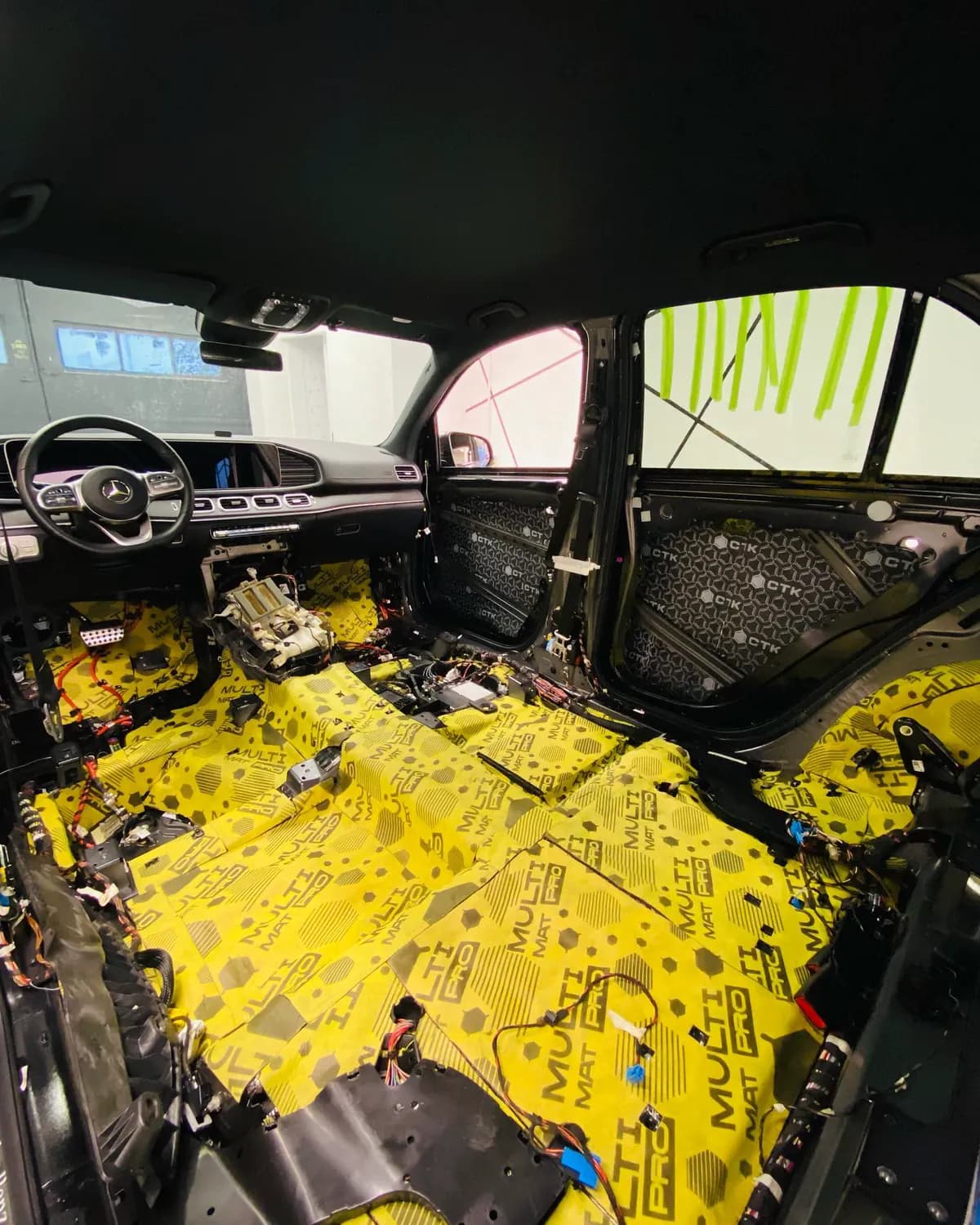
If you are planning soundproofing in Warsaw, describe the sound, when it occurs and where in the cabin it is most noticeable. If you want a numerical result, agree how to compare the runs before the interior is dismantled and ask whether measurement is included in the quote. The Mercedes GLE project shows the scope of work on the floor, roof and doors.
Questions and answers
What if I did not take a reading before soundproofing?
Keep the current reading and its conditions as a baseline for any later work. A figure from a car review or a similar model comes from a different set of tyres, road and settings. It will not tell you the earlier noise level in your own car.
Is it worth measuring in the back seat as well?
Yes, if rear passengers are bothered or the sound seems to come from the boot. Choose a second microphone position and repeat it before and after the work. Treat the front and rear results as separate comparisons. They represent sound arriving at different places in the cabin.
Is LAeq enough if the problem is an occasional knock?
A brief knock may make little difference to the equivalent level over the whole segment. Note the bump or surface change that triggers it, whether it repeats and which side it comes from. Agree a separate check on the same stretch for that particular sound.
Describe the noise before choosing what to treat
Note the car model, the sound and the conditions in which you hear it. Have those details ready when you open the form on the service page.