
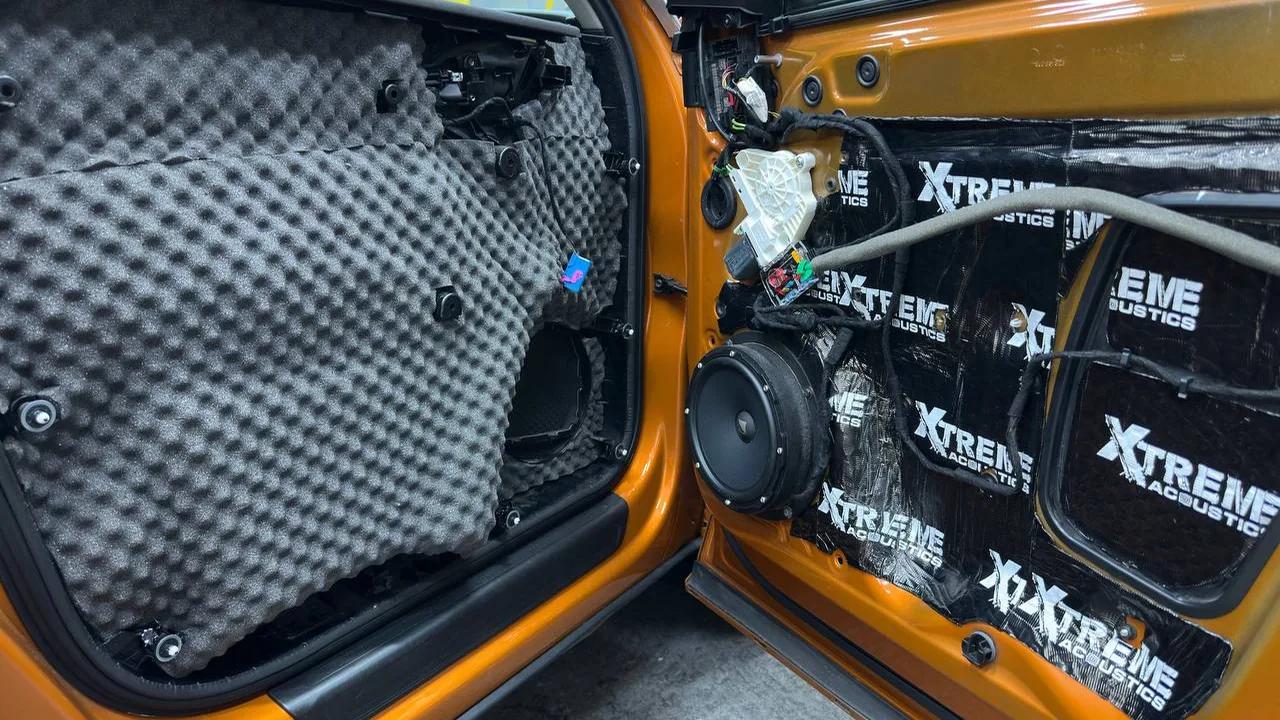
If the sound got worse as soon as you replaced your car speakers, start with what changed during installation. If there is less bass with both sides playing than with either side alone, check polarity and how the channels combine in the cabin. A rattle in one door points to the mount and trim. If both sides are quieter, check how well the replacements match the factory system.
What should you check for each symptom?
If a channel cuts out, the amp goes into protection or you smell burning, switch off the audio and report the problem before listening again. For other symptoms, park and pick a short, familiar passage with clear bass and vocals. Start at a low volume. Use the same source and sit in the same seat. Note the audio settings and turn off any extra bass boost. Change one setting at a time and restore it after the check.
| What you hear | What you can check | What to ask the installer to check |
|---|---|---|
| Bass gets weaker when both sides play | At the same volume, move the balance left, right, then back to centre. If you changed the front speakers and have a fader, move it to the front for the comparison. | Polarity at the connectors and how the channels sound separately and together. Factory processing and your seating position can also affect the result. |
| One door rattles on a particular note | At low volume, lightly hold the trim next to the grille. A change in the noise suggests the trim is involved. Empty the door pocket too. | Clips, the mounting ring, the gasket and grille clearance. If the crackle remains at low volume, ask them to check the speaker and its connection as well. |
| Both sides sound quieter or have little bass | Compare with what you remember from the same source and settings. Note whether it is mainly the bass or the whole track that sounds quieter. | The old and new speaker models and their sensitivity, the load the radio or amp can handle, the mounting seal and the frequency range at the output. |
| A channel cuts out or the amp goes into protection | Stop listening and turn off the audio. Note the volume at which it happened and whether the sound went out on one side or throughout the car. | The harness, connections and load before the next test. |
Why can a speaker swap leave you with less bass?
If both speakers receive a similar signal and one is wired with its polarity reversed relative to the intended connection, some low frequencies can weaken when the two play together. Comparing sides with the balance control helps narrow down the cause. Verify the connections against the diagrams for the car and the kit before changing any wiring.
A gap between the speaker basket and the mounting ring can let sound from behind the cone weaken the bass from the front. Another possibility is a filter in the head unit, factory amplifier or speaker kit crossover. If a channel carries only part of the frequency range, another speaker connected to that output will still receive the same limited signal.
What should you tell the installer before a recheck?
Give the make, model, year and audio system version, the old and new speaker models, the positions that changed and the adapter type if you know it. Say whether you kept the factory head unit and amp. If there is a rattle, note whether it appeared only after the trim went back on. If a window started catching or sticking after the swap, leave it where it is until it has been checked.
Example note. “The front speakers were replaced and the factory head unit stayed. In the same chorus there is bass on the left and right separately, but it gets weaker with the balance centred. There is no rattle at low volume.” That gives the installer a reason to start with the connections and compare channels before you buy anything.
How do you check whether the symptom is gone?
After the recheck, play the same passage while parked, from the same seat and with the settings you noted. Recreate the conditions in which you noticed the problem. For weak bass, compare the channels again. For a door rattle, listen for it in the passage that brought it out. If the doors were taken apart, ask for a check of the windows and any controls disconnected during the work.
Questions and answers
What if it only happens over Bluetooth?
Play the same track from another available source if you can get the listening level close. Note whether the problem goes away when you switch sources. Check the app’s EQ and volume normalisation settings before attributing the symptom to the speaker installation.
Should both sides sound identical from the driver’s seat?
The two speakers sit at different distances from the driver, and factory settings can also affect what you hear. A comparison is most useful when it exposes a new, repeatable symptom after the swap. An installer can measure a noticeable difference in level or tone.
Should I bring the old speakers to the recheck?
Yes, if you still have them. Part markings and photos of the plugs help identify exactly what was replaced. If the old speakers still work, the installer can consider using them for comparison. Mention the original fault if that was the reason for changing them.
Discuss your speaker upgrade in Warsaw
See the car audio service scope. Bring the audio system version, a list of parts that changed and a short description of the symptom.