
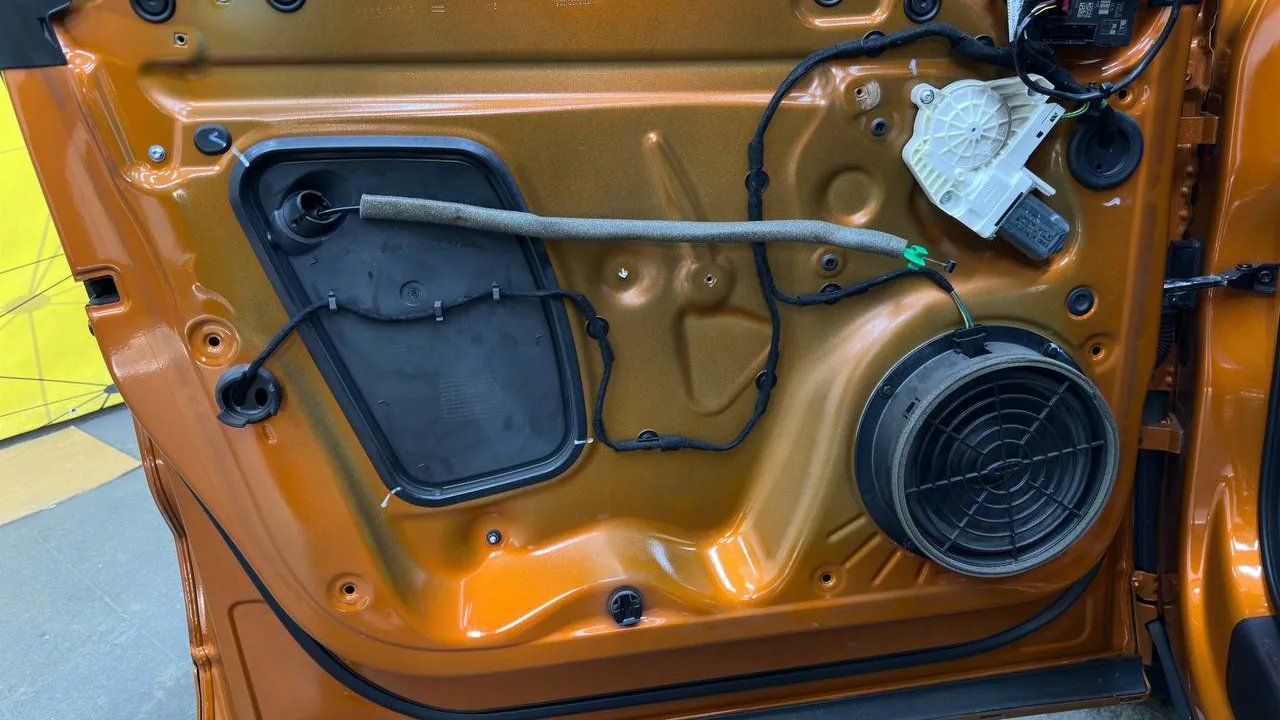
Improve factory audio by finding the weakest link: check faults, the source signal and mounting before choosing a first upgrade. Speakers can change tonal quality, door treatment can reduce resonances, an amplifier can add power headroom, DSP can align channels and a subwoofer can extend low bass. Every car does not need every change.
What should you check before buying speakers?
Park safely, choose a familiar track and use your normal listening level. Check balance and fader, several sources and both front channels. Note whether vocals or bass are missing, or whether you hear rattles or distortion. A failed channel needs diagnosis before a parts list.
Identify the factory audio version: the radio may drive the speakers directly or feed a separate amplifier. Channels may already carry filters and equalisation. Speaker diameter and the system badge alone do not identify the signal at a mounting position.
Which first upgrade matches the symptom?
This is a decision guide, not a remote diagnosis. Where symptoms overlap, checking the installation comes before purchasing equipment.
| What you hear | What to check | Possible first stage | What it cannot fix alone |
|---|---|---|---|
| Rattling with bass | Speaker mounting and trim | Repair mounting, treat the door | Missing deep-bass extension |
| Unclear vocals | Speakers, source bandwidth, settings | Suitable speakers and installation | Radio power limits |
| Harsh sound as volume rises | Origin of distortion and headroom | Amplification after diagnosis | A damaged driver |
| Off-centre soundstage | Levels, polarity, delays | DSP configuration and tuning | Loose panels |
| Missing deepest bass | Available signal and space | Subwoofer with suitable amplification | Unclear vocals |
Can the factory radio and screen stay?
Often, but identify the signal path first. High-level speaker inputs must suit the vehicle output levels and configuration. A digital OEM system may require a separate interface; an optical DSP input alone does not establish compatibility.
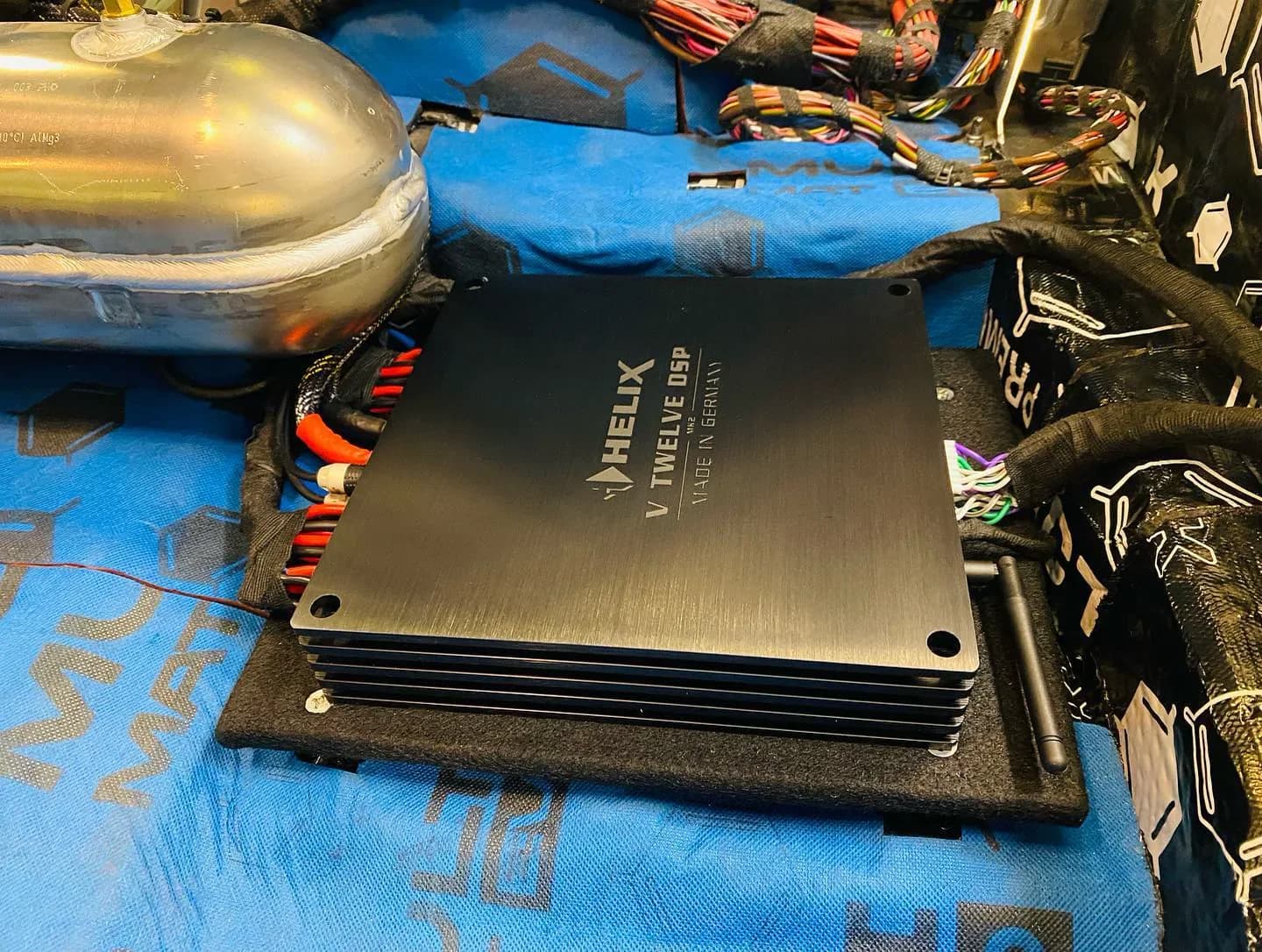
Agree which calls, navigation prompts, parking alerts and controls must remain. An amplifier with DSP combines processing and speaker power; a standalone processor needs a suitable amplification stage. Configuration must match the actual channels and filters.
Why do doors and tuning belong in the plan?
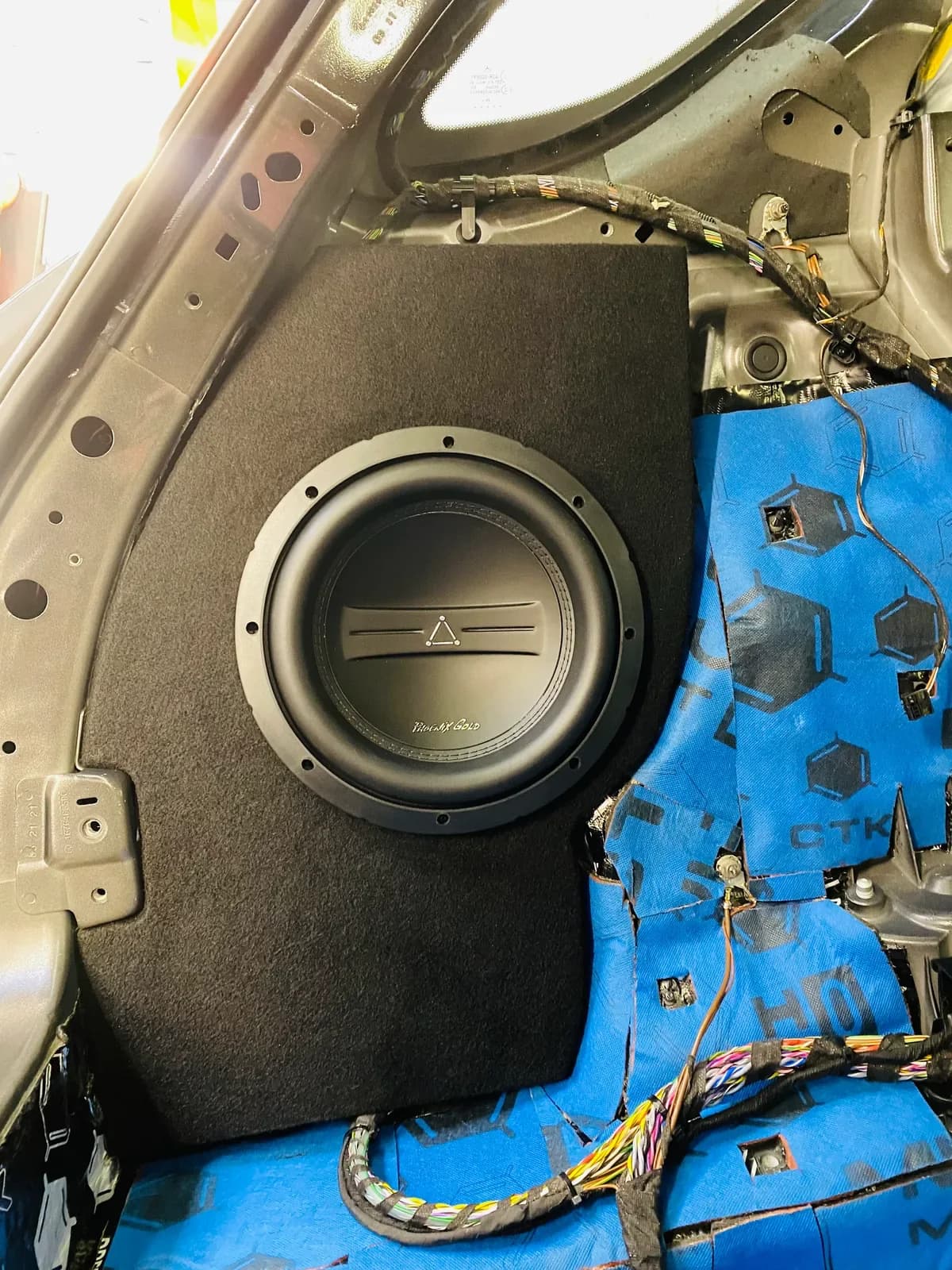
A rigid adapter and a sealed speaker-to-mount joint help prevent unwanted movement and leaks. Vibration-damping material acts on panels, while suitable decoupling material can reduce trim contact noises. Drains, window travel and the factory water barrier must remain functional.
After installation, check levels, filters and channel integration. A DSP file from another car is not a completed tune for your system. In an active system, correct crossover configuration is needed before powering the drivers.
How can one useful stage leave room for more?
Planning example: you want clearer vocals, the original screen and a usable boot. Start by checking the front speakers, signal and doors; consider a subwoofer separately. If deep bass is the only problem, a different order may fit. This is a scenario, not a studio case study.
- Give the model, year, audio version and a photo of the radio menu.
- Write down one main problem and a first-stage budget.
- Plan later channels, equipment space and shared trim removal.
- Compare equipment, installation and tuning in one complete quote.
Questions and answers
Will better speakers always play louder?
No. Output depends on sensitivity, impedance, the source signal and available power, among other factors. New speakers may improve tonal quality without raising the maximum level. Compare sensitivity under the same measurement conditions and verify electrical compatibility.
Must the whole car be soundproofed first?
No. If door-speaker sound is the issue, assess mounting and that area first. Tyre noise, floor noise and leaking seals need different checks. Complete soundproofing is not a mandatory step for every audio upgrade.
What should you compare when collecting the car?
Use the same track, source and listening position at a similar sound level. Assess vocals, bass, rattles and retained vehicle functions separately. Agree what the first stage is intended to improve and which limitations remain.
Ready to plan better sound?
Tell us about the car, your music and the result you are after. We will identify a sensible starting point.